
Opening Hours
- Mon to Fri: 09.00 to 18.00
- Saturday: 10.00 to 16.00
- Sunday: 10.00 to 14.00
Quick Contact
- (+91) 857 302 7162
- samvednahospitalvns@gmail.com
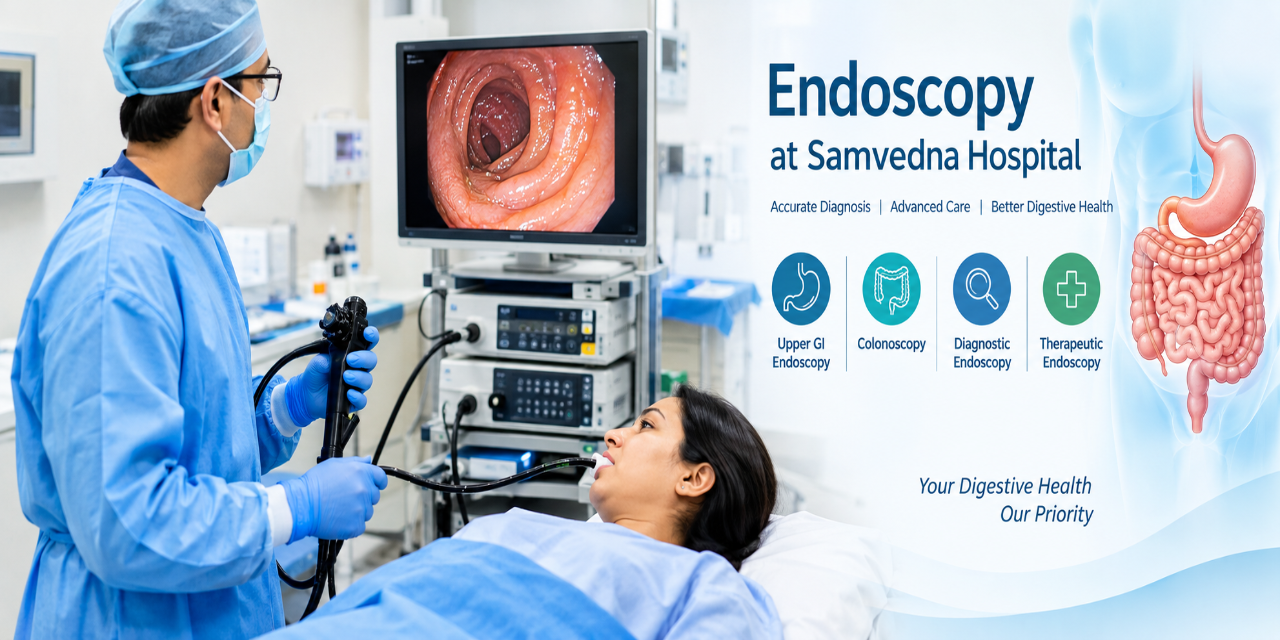
Endoscopy
Endoscopy is a procedure to examine the interior of a body cavity or organ using a flexible tube with a camera.
Advanced Diagnostic Care for Digestive Health
At Samvedna Hospital, we provide endoscopy services to help diagnose and evaluate various conditions affecting the digestive system. Endoscopy is a minimally invasive medical procedure that allows doctors to examine the inner lining of the digestive tract using a thin, flexible tube equipped with a light and camera.
Our focus is on providing accurate diagnosis, patient comfort, safety, and compassionate care throughout the procedure. Whether you are experiencing persistent digestive symptoms or require further medical evaluation, our team helps guide you toward appropriate diagnosis and treatment.
What Is Endoscopy?
Endoscopy is a medical procedure used to examine the inside of the body, particularly the digestive tract, without the need for major surgery. A specialized instrument called an endoscope transmits images to a monitor, enabling the doctor to identify abnormalities and, when necessary, collect tissue samples for laboratory testing.
At Samvedna Hospital, endoscopy may be recommended to investigate digestive symptoms, identify underlying conditions, and support treatment planning based on the patient's clinical needs.
Types of Endoscopy
1. Upper GI Endoscopy (Gastroscopy)
Upper gastrointestinal endoscopy examines the oesophagus (food pipe), stomach, and the first part of the small intestine. It is commonly recommended for patients experiencing persistent upper digestive symptoms.
Conditions that may be evaluated include:
- Persistent acidity, heartburn, or acid reflux
- Difficulty or pain while swallowing
- Recurrent nausea or vomiting
- Unexplained upper abdominal pain
- Suspected gastritis or stomach ulcers
- Gastrointestinal bleeding
- Certain abnormalities of the oesophagus or stomach
2. Colonoscopy
Colonoscopy allows the doctor to examine the inner lining of the large intestine and rectum using a flexible camera-equipped instrument.
It may be recommended for:
- Persistent changes in bowel habits
- Blood in the stool
- Unexplained abdominal discomfort
- Evaluation of suspected intestinal inflammation
- Investigation of unexplained anaemia in selected patients
- Screening for colorectal cancer or detection of precancerous polyps, when appropriate
3. Diagnostic Endoscopy
Diagnostic endoscopy helps doctors investigate symptoms, examine suspicious areas, and identify possible digestive disorders. Small tissue samples, called biopsies, may be collected when medically indicated.
4. Therapeutic Endoscopy
In selected cases, endoscopy can also be used to perform certain treatments. Depending on the indication and available facilities, these may include controlling bleeding, removing suitable polyps, or retrieving foreign bodies from the digestive tract.
When Should You Consider an Endoscopy?
Your doctor may recommend an endoscopy if you experience:
- Persistent or recurring abdominal pain
- Difficulty swallowing
- Frequent vomiting or persistent nausea
- Long-lasting acidity or reflux symptoms despite treatment
- Blood in vomit or stool
- Unexplained weight loss
- Persistent changes in bowel habits
- Suspected ulcers or other digestive tract abnormalities
Not every digestive symptom requires endoscopy. The decision is made after evaluating your symptoms, medical history, examination findings, and other relevant investigations.
How to Prepare for an Endoscopy
Proper preparation helps improve the quality and safety of the procedure. Your healthcare team will provide instructions according to the type of endoscopy planned.
Before an upper GI endoscopy:
- Follow the fasting instructions provided by your doctor.
- Inform the medical team about your allergies, existing medical conditions, and current medications.
- Discuss blood-thinning medicines and diabetes medicines before making any changes to them.
- Arrange assistance or transport home if sedation is planned.
Before a colonoscopy:
- Follow the prescribed bowel-cleansing preparation carefully.
- Follow the recommended diet and fluid instructions.
- Inform your doctor about your medicines and medical history.
- Confirm when to stop eating and drinking and how to take your regular medicines.
Do not stop prescribed medication or alter your treatment without medical advice.
What Happens During the Procedure?
- Initial assessment: The doctor reviews your symptoms, medical history, medications, and suitability for the procedure.
- Preparation: The team explains the procedure and obtains your informed consent.
- Procedure: The endoscope is gently guided into the relevant part of the digestive tract. Sedation may be offered when appropriate.
- Examination: The doctor examines the digestive tract and may take biopsies or perform indicated treatments.
- Recovery: You are monitored after the procedure until the medical team determines that you are ready to leave.
The duration depends on the type and complexity of the procedure.
Is Endoscopy Safe?
Endoscopy is generally considered a safe procedure when performed by appropriately trained professionals with suitable precautions. Like all medical procedures, it carries some risks. These may include reactions to sedation, bleeding, infection, or, rarely, a tear in the digestive tract.
Our team emphasizes appropriate patient assessment, procedural precautions, and post-procedure monitoring to support patient safety.
Recovery After Endoscopy
Most patients can return home on the same day, depending on the procedure and their clinical condition.
After the procedure, you may experience temporary bloating, mild abdominal discomfort, or a sore throat following an upper GI endoscopy. These symptoms generally settle within a short period.
If sedation has been used, follow the discharge instructions regarding driving, operating machinery, alcohol, and important decisions. Seek urgent medical attention if you develop severe or worsening abdominal pain, significant bleeding, breathing difficulty, fever, or other concerning symptoms.
Why Choose Samvedna Hospital for Endoscopy?
At Samvedna Hospital, we aim to make digestive healthcare more accessible and comfortable through a patient-centred approach.
- Patient-focused care: Clear communication and respectful attention to individual needs.
- Clinical evaluation: Appropriate assessment before recommending a procedure.
- Diagnostic support: Endoscopic findings and biopsy results, when applicable, help guide further care.
- Safety-focused approach: Attention to preparation, monitoring, and recovery instructions.
- Personalized guidance: Advice based on symptoms, medical history, and the treating doctor's assessment.
Specific procedures, equipment, sedation options, and treatment availability should be confirmed with Samvedna Hospital.
Frequently Asked Questions
1. Is endoscopy painful?
Endoscopy may cause temporary discomfort, such as gagging during upper GI endoscopy or bloating during colonoscopy. Sedation or other comfort measures may be available depending on the procedure and your medical condition.
2. How long does an endoscopy take?
A routine diagnostic upper GI endoscopy often takes around 5–15 minutes, while colonoscopy may take approximately 20–45 minutes. Preparation and recovery require additional time, and complex procedures may take longer.
3. Can I eat after an endoscopy?
You can usually resume eating after your healthcare team confirms it is safe. Follow the specific instructions provided, particularly if your throat was numbed, sedation was used, or a therapeutic procedure was performed.
4. Is hospital admission required?
Many routine endoscopic procedures are performed on an outpatient or day-care basis. Admission may be necessary depending on the patient's condition, the procedure, or any complications.
5. Will I need a biopsy?
Not everyone requires a biopsy. If the doctor identifies an area that needs further evaluation, a small tissue sample may be collected and sent for laboratory examination.
6. What is the difference between endoscopy and colonoscopy?
Upper GI endoscopy examines the food pipe, stomach, and upper small intestine. Colonoscopy examines the large intestine and rectum. Both use flexible instruments with cameras but evaluate different parts of the digestive tract.
7. When will I receive my results?
The doctor may discuss initial findings after the procedure. If a biopsy is taken, the final report may take additional time depending on the laboratory and type of testing.
Book an Endoscopy Consultation at Samvedna Hospital
Do not ignore persistent digestive symptoms. Timely medical evaluation can help identify the cause and determine the appropriate next steps.
Contact Samvedna Hospital to schedule a consultation with the relevant specialist and learn whether endoscopy is suitable for your condition.
Your digestive health matters. Let Samvedna Hospital support you with informed guidance and compassionate care.